That is why electrical codes are getting tougher on Solar. Lots of fires.
First thing Firement do with a house fire with solar is get on the roof with a fire ax and smash all the panels with a fire ax. It is the only way to turn them off. That is why CA a electrical building codes requires setbacks on solar panels so fire fighters have enough room to walk around the roof and smash panels.
When Diets & Watson warehouse burned down in NJ, all the fire department could do is watch because the place was covered in solar panels. Not a complete loss, the Fire Fighters had free nice hot meals while they watched. Lots of BBQ on the house of course. .
-
See the link below for a discussion the electric field outside of a current carrying conductor.
Leave a comment:
-
Science as in physics/electromagnetism? What do you like to know other than opposite charges attract?
So you get zapped once a while. That little bright flash on the tip of your finger is called an arc.
I'm not SE engineer, but from what I read, it detects both. I don't disagree with you on the shortcomings of micros. I got SE myself. But all I'm saying is that 240V AC is easier to work with than high voltage DC.Leave a comment:
-
Magnetic field doesn't cause arcs. Yes, the closing/opening of switches can create an arc, but the mechanism is different from arcs caused by static charges. With DC, if the wire is not shield properly, charged particles will accumulate around the wire. With the right voltage and humidity, arc occurs to release the energy build-up.
Yes, 50V AC or DC may be able kill you, but that's death by current not arc. How many times we read news that some dude gets hit by lightning that burns his hair and boots, but some how survived with just skin burns?
Sure, the key to safety is proper installation and maintenance, I completely agree. For a qualified electrician, it's probably no different but for a less qualified one with substandard parts, AC is a safer choice.Leave a comment:
-
Until you have some science to back that up with, I call BS on it.
Wind can cause a static field around your glass windows. So ?High voltage DC can create a static field around the wires
Arc fault detection is for detecting bad wires/connectors, not static fields.
Microinverters put lots of electronics on the roof, where it's not inspectable, and has lots of material to cook and burn.Leave a comment:
-
AC voltage generates a magnetic field also and can actually energize "dead" (not grounded) or De-energized wires running parallel along side the energized ones.
High voltage AC can also generate pretty big arcs during the opening of energized switches depending on conditions.
According to OSHA anything above 50V (AC or DC) can kill you. What makes it safe is how it is designed, installed and maintained. So AC is not really any safer to work with then DC above 50 volts.Leave a comment:
-
AC is definitely safer to work with. High voltage DC can create a static field around the wires. If not properly shielded, can cause arcs or sparks. Modern inverters has built-in arc detection (I know SolarEdge has it) that greatly reduces the chance of arcs, although not completely. IMO, it's one of the reason, some smaller (or less qualified) installer prefers micro-inverters over string or SE optimizers.Leave a comment:
-
When it comes to an electrical installation (AC or DC) the integrity of how is works and not causing a fire comes down to how it was installed and maintained.
I have been exposed to quite a few DC powered equipment installations without ever seeing a fire cause by it being DC.
My guess is that it wasn't necessarily the old DC technology that caused those fires but how the solar pv systems were installed which should have involved proper wire termination, proper wire size, over current protection, protection from environmental conditions and how good the protective maintenance plan was followed.Leave a comment:
-
Solar panel fires!
One of my Facebook friends started posting this stuff, now it's in the back of my mind.
image.jpg
image.jpg
image.jpg
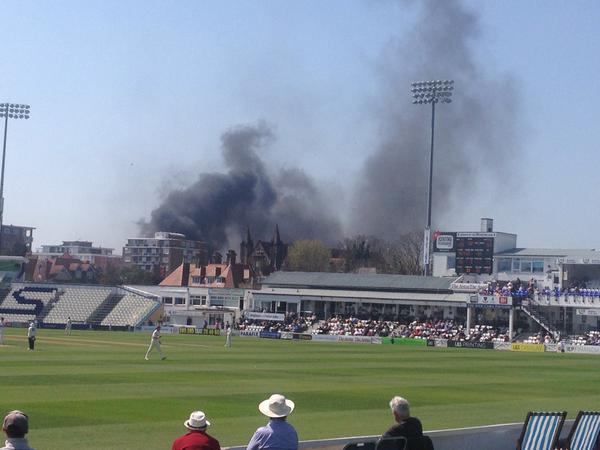
http://www.pv-tech.org/mobile/news/s...ona_catch_fire
This one is about 25 miles south of me. Article claims that the system was up and running for five years and then all of a sudden it caught on fire. Was using old technology DC on the roof, now they don't use that technology anymore they only use micro inverters which is AC all the way to the panel which is safer. WHAT??
http://news10.com/2015/05/08/faulty-...ice-in-latham/


Leave a comment: