X
 
  • Time
  • Show
Clear All
new posts
  • macaddict
    Solar Fanatic
    • Jun 2017
    • 133

    #1

    Do we still need rooftop solar panels when...

    I have solar panels and love having them however...

    when we have generation / electric companies, like PSEG in the northeast, finally launching plans to achieve net-zero carbon emissions by 2050, does it still make sense for distributed electric production (aka rooftop solar panels)?

    From a financial point, my guess is that it is cheaper per watt to install 1000 panels than to install 32 panels.

    From an environmental point, both get us to the same point.

    I can see the job creation argument in favor of distributed solar.

    What are your thoughts?

    I understand that I'm posting this question on a solar panel forum, but still interested to read arguments on both sides.
    https://pvoutput.org/list.jsp?userid=59404
  • ButchDeal
    Solar Fanatic
    • Apr 2014
    • 3802

    #2
    Originally posted by macaddict
    I have solar panels and love having them however...

    when we have generation / electric companies, like PSEG in the northeast, finally launching plans to achieve net-zero carbon emissions by 2050, does it still make sense for distributed electric production (aka rooftop solar panels)?

    From a financial point, my guess is that it is cheaper per watt to install 1000 panels than to install 32 panels.
    Sure but who is paying and who is benefitting. Homeowners get benefits from rooftop.
    Why the question? It seems to be asking do we really need small private ownership when large corporations are cheaper?
    If some people want to have their own system, does it hurt you? No, it actually help you and the overall system to have some distributed systems that others pay for.

    Originally posted by macaddict
    From an environmental point, both get us to the same point.
    Well sort of. there are benefits to using rooftop solar, like it doesn't take up any land like a large solar farm. It reduces the load on the grid system, has much less loss from the grid system, and adds stability.


    Originally posted by macaddict
    What are your thoughts?

    I understand that I'm posting this question on a solar panel forum, but still interested to read arguments on both sides.
    Both are needed and more. We need non-PV based central solar systems (thermal) that can store solar energy as heat to ride through storms and nights as well, and some distributed storage plants to help with short stability issues as well.
    OutBack FP1 w/ CS6P-250P http://bit.ly/1Sg5VNH

    Comment

    • Markyrocks69
      Solar Fanatic
      • Jun 2019
      • 226

      #3
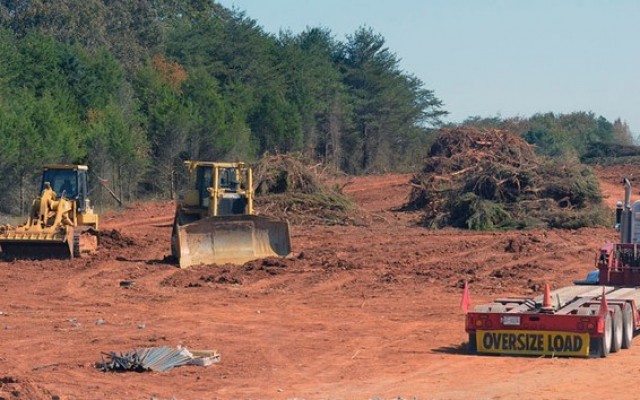
      The only issue I have with large companies investing in their own solar farms is that, with the ever increasing population in this country, land isn't something were making more of. That being said solar farms require vast amounts of space to install. Solar farms are great ideas but we have to ask ourselves what is the balance between the benefits of a solar farm compared with countless acres of forested areas being cleared to install them? It's a double edged sword. On one hand solar reduces carbon emissions but we also need trees for various obvious reasons.

      Comment

      • peakbagger
        Solar Fanatic
        • Jun 2010
        • 1566

        #4
        I am hard pressed to come up with a reason why locally sited generation on a dwelling roof is going to go out of style especially when many folks are going to end up with mobile batteries on wheels that could be used for load shifting. I do not see the cost of transitioning to net zero carbon emissions being cheap and assuming the costs get apportioned based on usage cutting usage by having on the roof generation makes sense to me. At some point, roof integrated PV will get reliable and reasonably priced and make roof top solar more attractive.

        Comment

        • Ampster
          Solar Fanatic
          • Jun 2017
          • 3658

          #5
          Originally posted by Markyrocks69
          The only issue I have with large companies investing in their own solar farms is that, with the ever increasing population in this country, land isn't something were making more of.
          That sounds like the argument the land sales people use to sell you Florida swamp property or a California desert subdivision.
          That being said solar farms require vast amounts of space to install. Solar farms are great ideas but we have to ask ourselves what is the balance between the benefits of a solar farm compared with countless acres of forested areas being cleared to install them? It's a double edged sword. On one hand solar reduces carbon emissions but we also need trees for various obvious reasons.
          This Spring I drove across the country. I didn't see any forested areas being cleared for solar farms. Many are in the desert. The ones I see in California locally are taking up a little pasture land. In some cases they bring in sheep to keep the grass cut low. In those cases the land serves two purposes. I see cattle grazing under wiind farms.
          How much land would it take to power the United States?
          9 kW solar, 42kWh LFP storage. EV owner since 2012

          Comment

          • ButchDeal
            Solar Fanatic
            • Apr 2014
            • 3802

            #6
            Originally posted by Ampster

            This Spring I drove across the country. I didn't see any forested areas being cleared for solar farms. Many are in the desert. The ones I see in California locally are taking up a little pasture land. In some cases they bring in sheep to keep the grass cut low. In those cases the land serves two purposes. I see cattle grazing under wiind farms.
            How much land would it take to power the United States?
            Utilities and companies are building solar farms all over the US. You are unlikely to see them from highways though.
            Apple has reportedly begun building a huge solar farm that will provide power to its data center in North Carolina. According to the report, the farm will
            OutBack FP1 w/ CS6P-250P http://bit.ly/1Sg5VNH

            Comment

            • Ampster
              Solar Fanatic
              • Jun 2017
              • 3658

              #7
              Originally posted by ButchDeal

              Utilities and companies are building solar farms all over the US. You are unlikely to see them from highways though.
              https://www.cultofmac.com/126151/app...a-data-center/
              No doubt some of them are going to require clearing forested land. I did not mean to imply that no forests would be cleared. The economics of the Apple installation probably made sense to place it close to where the power is used.

              For a stand alone solar farm, land cost, transmission infrastructure and weather are probably the big drivers for location. in California that has resulted in an abundance of solar production in the southern part of the state. There is a lot of desert in Southern California. Long term the issue is going to be transmission and distribution infrastructure. That has already emerged in the midwest where there is an abundance of wind.

              FWIW, it would take a solar farm the size of San Bernardino County to power the US. That still leaves plenty of forests undisturbed.
              Last edited by Ampster; 07-31-2019, 11:44 AM.
              9 kW solar, 42kWh LFP storage. EV owner since 2012

              Comment

              • Markyrocks69
                Solar Fanatic
                • Jun 2019
                • 226

                #8
                That's great for California but the majority of the country isn't desert... sure it makes sense to build solar farms on land that is already cleared. Like om actual farms but what's the consequences of that? Less farms, less food, then the cost of food goes up. The people most affected by this are the poor. It would be great if it was possible to build a 100 jigawatt solar farm in the desert to power the whole US but it's not reasonable from a distribution standpoint and the mass majority of the US isn't desert. Obviously noone is saying that all the forest would be cut down but you definitely have to look at the irony of this situation.

                You maybe talking about the size of what is required to power the US in terms of solar panels but you also have to take into account 100% generation means fields of battery bank buildings and power substations and things like that. That being said if the land your house is built on already is cleared it makes little sense to clear more for the panels if your roof or yard is readily available. In cities is a different story but I've seen canopies over parking lots built to put solar arrays on top and electric charging stations ect. I have no problem with this scenario.

                Sure theres always going to leave plenty of forest undisturbed but for how long? We keep saying that like theres always going to be some left, that's the kinda thinking that got us into the mess were in now.

                Comment

                • ButchDeal
                  Solar Fanatic
                  • Apr 2014
                  • 3802

                  #9
                  Originally posted by Ampster

                  No doubt some of them are going to require clearing forested land. I did not mean to imply that no forests would be cleared. The economics of the Apple installation probably made sense to place it close to where the power is used.

                  For a stand alone solar farm, land cost, transmission infrastructure and weather are probably the big drivers for location. in California that has resulted in an abundance of solar production in the southern part of the state. There is a lot of desert in Southern California. Long term the issue is going to be transmission and distribution infrastructure. That has already emerged in the midwest where there is an abundance of wind.

                  FWIW, it would take a solar farm the size of San Bernardino County to power the US. That still leaves plenty of forests undisturbed.
                  I would say that the biggest driver for location is the actually location of the company installing. In the East there are several Utilities that are installing solar and they want to install in an area that the utility is located so they are NOT going to install in south west because eastern Utilities are not in the south west. They would have to pay transmission fees and have losses from transmission lines if they did that.

                  and as far as San Bernardino county, that is a pretty damn big county, at 20k square miles. Maryland is only 12k square miles and New Jersey 8.7k square miles, for reference.

                  Here is a good example with Dominion Energy in VA: https://www.dominionenergy.com/compa...solar-projects
                  OutBack FP1 w/ CS6P-250P http://bit.ly/1Sg5VNH

                  Comment

                  • Ampster
                    Solar Fanatic
                    • Jun 2017
                    • 3658

                    #10
                    Originally posted by Markyrocks69
                    That's great for California but the majority of the country isn't desert... sure it makes sense to build solar farms on land that is already cleared. Like om actual farms but what's the consequences of that? Less farms, less food, then the cost of food goes up. The people most affected by this are the poor. It would be great if it was possible to build a 100 jigawatt solar farm in the desert to power the whole US but it's not reasonable from a distribution standpoint and the mass majority of the US isn't desert. Obviously noone is saying that all the forest would be cut down but you definitely have to look at the irony of this situation.
                    I saw a lot of desert in Utah, Nevada, Arizona and New Mexico. I am not in favor of cutting down forests for solar farms. Other than a few examples I believe the economics will generally help preserve the remaining the forests. Besides there are a lost of forests that are National and State Parks.Not to mention those that are privately owned by Timber companies. There are tradeoffs. I see farmers in the Central Valley allocate a portion of their acreage to solar. Some of that generation if not all is probably used to pump water to irrigate crops. That does not increase costs because 80% or more of the cost of water is the cost of electricity to pump and transport it.
                    You maybe talking about the size of what is required to power the US in terms of solar panels but you also have to take into account 100% generation means fields of battery bank buildings and power substations and things like that. That being said if the land your house is built on already is cleared it makes little sense to clear more for the panels if your roof or yard is readily available. In cities is a different story but I've seen canopies over parking lots built to put solar arrays on top and electric charging stations ect. I have no problem with this scenario.

                    Sure theres always going to leave plenty of forest undisturbed but for how long? We keep saying that like theres always going to be some left, that's the kinda thinking that got us into the mess were in now.
                    The mess we are in now? You mean the pollution from coal plants? One of my favorite diving spots in the South Pacific has lost over 50% of its splendor because of high CO2 concentration. There are a lot of polluted brownfields that can be converted to solar and battery sites. Tesla just announce a 1.2 GigaWatthour battery farm on the site of a soon to be abandoned power generating station in Oxnard California. Sorry for all the California examples but those are representive of what we could see in the future.
                    Last edited by Ampster; 07-31-2019, 01:59 PM.
                    9 kW solar, 42kWh LFP storage. EV owner since 2012

                    Comment

                    • peakbagger
                      Solar Fanatic
                      • Jun 2010
                      • 1566

                      #11
                      Lots of solar farms going up on capped landfills. These cant be built on "forever" so a solar developer puts in a ballasted PV system. Many are owned by municipalities who have no other use for a capped landfill so the community gets some revenue off what was liability.

                      I have a friend in the land trust business. All sorts of developers are trying to play games where they buy a piece of land for a PV farm and try to donate a conservation easement on it to a land trust as they "kept it from being developed" and then have revision clause that when the plant gets obsolete it reverts to the trust. In theory the developer has a decommissioning fund but expect the land trust gets stuck with cleaning it out and disposing of all the waste.

                      In the solar discussion do not discount snow. Most PV farms are optimized for summer and a tight space between rows to maximize the number of panels which means shallow angles. I drive by several solar farms in Mass in the winter that are covered with snow for a couple of days after a storm. The snow eventually slides off and forms a solid berm at the lower edge of the panel. Each snow storm builds the berm up until its level with the bottom row of the array and then it takes much longer to clear. I have seen one of two crews try to clean between panels but there is not a lot of place to put the snow as the farms usually use up every available bit of space.

                      Comment

                      • jflorey2
                        Solar Fanatic
                        • Aug 2015
                        • 2333

                        #12
                        Originally posted by Markyrocks69
                        The only issue I have with large companies investing in their own solar farms is that, with the ever increasing population in this country, land isn't something were making more of.
                        True. But the places where solar works best (i.e. the Southwestern deserts) are also the places where land is cheap and otherwise unused. Also note that the land beneath solar arrays is still usable.

                        Comment

                        • jflorey2
                          Solar Fanatic
                          • Aug 2015
                          • 2333

                          #13
                          Originally posted by Markyrocks69
                          That's great for California but the majority of the country isn't desert...
                          In those places, where there's no available land, build them over roads. It's a win/win - those already go between population centers, you provide some protection to the road (and drivers) from the elements, and the more roads = the more people in the area.
                          sure it makes sense to build solar farms on land that is already cleared. Like om actual farms but what's the consequences of that? Less farms, less food, then the cost of food goes up.
                          That would be true if the factor limiting food costs were available acreage for farms. However, the limiting factors nowadays are water, fertilizer, labor and transport to market (which one is the biggest depends on the location.)

                          Comment

                          • ButchDeal
                            Solar Fanatic
                            • Apr 2014
                            • 3802

                            #14
                            Originally posted by jflorey2
                            True. But the places where solar works best (i.e. the Southwestern deserts) are also the places where land is cheap and otherwise unused.
                            This area is best used for large industrial plants and solar thermal plants instead of PV.
                            Also note that a good deal of the southwest is were we grow the most food in the US.
                            And finally, if you try to generate power in southern California for use in NY you are going to have a lot of cost in transmission and quite a bit of loss as well, and we will need to built a great deal more transmission lines, thus it is much better to generate power closer to its point of use.

                            Originally posted by jflorey2
                            Also note that the land beneath solar arrays is still usable.
                            depends on what you want to use it for and/or how you mounted the PV. use is limited though.
                            OutBack FP1 w/ CS6P-250P http://bit.ly/1Sg5VNH

                            Comment

                            • ButchDeal
                              Solar Fanatic
                              • Apr 2014
                              • 3802

                              #15
                              Originally posted by jflorey2
                              In those places, where there's no available land, build them over roads. It's a win/win - those already go between population centers, you provide some protection to the road (and drivers) from the elements, and the more roads = the more people in the area.
                              building over roads is quite a bit more costly than building in a field or on an existing roof.

                              Since the question is about rooftop solar, roofs are still available space for building solar and otherwise unproductive. Installing solar on the roof has been shown to reduce cooling costs in the building as well.
                              OutBack FP1 w/ CS6P-250P http://bit.ly/1Sg5VNH

                              Comment

                              Working...