X
 
  • Time
  • Show
Clear All
new posts

  • JSchnee21
    replied
    Hi JRqwertyui, I'm not sure I know what you are asking. I've placed a handy link below that shows were various panels are manufactured. But the real question, from my perspective, is what size system do you want/need? In terms of kWh per year? Based on where you live and the panels you choose, how many panels will you need to meet this goal? Will they fit on your roof -- with a "standard" efficiency commodity panel? Say Canadian Solar, Trina, or Hanwha Q CELLS, or others. Or, to meet your productivity goals, do you need a higher efficiency, wattage (still 60/96-cell footprint) panel (LG/Panasonic/SunPower)?

    Are you willing to pay more / how much are you willing to pay to meet the productivity goal? BUT, realizing that "paying extra" to hit this target may / will likely reduce your ROI -- depending on your state's incentives. If your primary payback is POCO savings, any extra you pay to make your system slightly larger or more efficient will likely have a negative impact on ROI. If you live in a state that still has good SREC values (DC, NJ, Mass) you'd have to factor in the potential value of the added SREC's from your efficiency/productivity enhancements to see if you'd benefit / break even on the "upgrade."
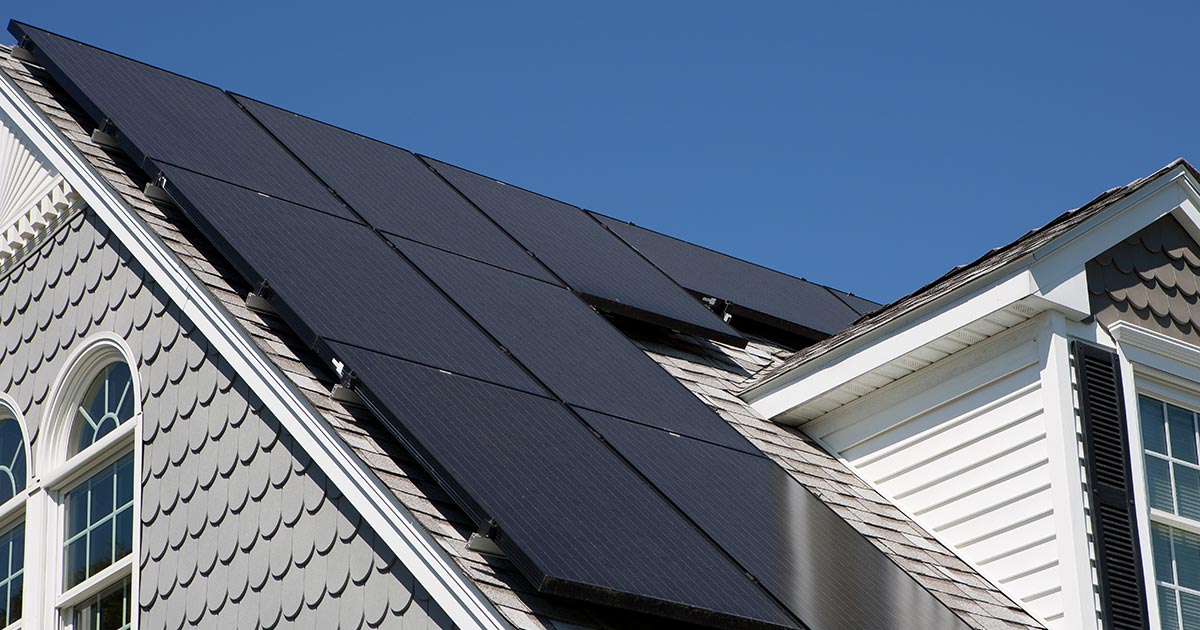
    To buy the best solar panels, be sure to compare prices, warranties, and efficiencies of different solar panel manufacturers. Here are the top 20 brands for 2026.


    BUT, perhaps a better way to ask the question is:

    Given that you've chosen one or more reputable, high volume vendors to quote your project. Which panels do they use all the time for the majority of their projects? The vendor will be most comfortable with this panel (good experience, positive track record, no duds or issues with shipping) and will likely be getting the best pricing from their distributor because of the high volumes.

    In my case, my vendor initially quoted 35 365W 72-cell LG's (which they buy in volume (containers full) for their commercial projects) for my ~12kW array -- but they won't fit well on my roof due to the added size. So that left me looking at either 320W LG's or the 330W Panasonic's. In my case the pricing was pretty similar, and with a max of 37 panels that could fit on my roof, only the Panasonic would give me 12kW and they came with a better warranty as a bonus. If I had gone with a standard panel, my installed price per watt would have been less (perhaps 20-30 cents less / W) but my system would have maxed out about 10kW.

    One other aspect to consider is the impact of the size of the inverter you chose and how it's installed (line side, load side, etc.). Are you planning to stick with a ~6700W inverter and a load side tap on a 200 amp panel? If so, Butch's recommendation of "22 300W panels -- like Canadian Solar mono 300s" or something similar from Trina or Hanwha would be a great choice assuming your vendor's can get a good price on them.

    Hi I edited out your link, no links to that site please, its direct competition to our site sponsors, cheers.
    Last edited by solar pete; 07-09-2017, 05:51 PM.

    Leave a comment:


  • JRqwertyui
    replied
    ok so I netted out with the conversation above that the Pani panels are ok quality if I'm willing to pay more than the others mentioned. I'm looking for a C-Sun vendor in NorCal, out of all mentioned, I don't have a quote for that manufacture... All the others mentioned are from:

    C-Sun - China
    canadian - China
    trina - China
    QCell - ???
    S-Energy - ???
    Last edited by JRqwertyui; 07-07-2017, 12:20 PM.

    Leave a comment:


  • J.P.M.
    replied
    Originally posted by ButchDeal

    1W of LG solar will produce the same as 1W of Panasonic solar, and the same as 1w of Sunpower and the same as 1w of C-Sun.
    The main difference here is petty clear, the C-Sun is a 72 cell module which is larger than the others listed here. So if you have the space then sure the C-Sun or canadian, or trina, or QCell, or S-Energy, etc. will be great. If you have limited space then you will likely want something with higher efficiency so you can fit more watts on the roof.
    Or, use the less expensive but slightly less energy output per area density panels and put the price difference into conservation measures which almost certainly have a better ROI than the cost differential of the panels. Smaller Wattage array, compounded with less per Watt and a better ROI on difference in B.O.S when put into conservation measures/lifestyle changes probably equals a lower bill with an electrically smaller array when combined w/conservation measures for the same net $$ outflow.

    Leave a comment:


  • ButchDeal
    replied
    Originally posted by GRickard
    I see a lot of discussion here about Panasonic, LG, and Sunpower. All seem to be great panel with high efficiency, but I also see a lot of discussion that panels are a commodity any more and brand doesn't really matter.

    I looked up the Panasonic N330's that the OP has quoted and they are $1.03 a watt and 19.7% efficient. I also looked at a C-Sun 340 watt mono that is less efficient at 17.55% but only costs $.53 a watt. Are these brands really going to produce enough extra to justify almost twice the price or are the contractors quoting the more expensive panels so their mark-up profit will be higher.

    Greg
    1W of LG solar will produce the same as 1W of Panasonic solar, and the same as 1w of Sunpower and the same as 1w of C-Sun.
    The main difference here is petty clear, the C-Sun is a 72 cell module which is larger than the others listed here. So if you have the space then sure the C-Sun or canadian, or trina, or QCell, or S-Energy, etc. will be great. If you have limited space then you will likely want something with higher efficiency so you can fit more watts on the roof.

    Leave a comment:


  • sensij
    replied
    Originally posted by GRickard
    I see a lot of discussion here about Panasonic, LG, and Sunpower. All seem to be great panel with high efficiency, but I also see a lot of discussion that panels are a commodity any more and brand doesn't really matter.

    I looked up the Panasonic N330's that the OP has quoted and they are $1.03 a watt and 19.7% efficient. I also looked at a C-Sun 340 watt mono that is less efficient at 17.55% but only costs $.53 a watt. Are these brands really going to produce enough extra to justify almost twice the price or are the contractors quoting the more expensive panels so their mark-up profit will be higher.

    Greg
    I think there is an element of getting higher equipment markup, but also knowledge that balance of system and labor costs will be lower for systems of the same size since fewer panels are required. Generally, I wouldn't expect to see the entire 0.50 / W savings on the panels to show up in the price... maybe half of that?

    Edit: and no, I personally don't think even a $0.20 / W difference in price is worth it, which is why I've got Canadian Solar panels on my roof.

    Leave a comment:


  • GRickard
    replied
    I see a lot of discussion here about Panasonic, LG, and Sunpower. All seem to be great panel with high efficiency, but I also see a lot of discussion that panels are a commodity any more and brand doesn't really matter.

    I looked up the Panasonic N330's that the OP has quoted and they are $1.03 a watt and 19.7% efficient. I also looked at a C-Sun 340 watt mono that is less efficient at 17.55% but only costs $.53 a watt. Are these brands really going to produce enough extra to justify almost twice the price or are the contractors quoting the more expensive panels so their mark-up profit will be higher.

    Greg

    Leave a comment:


  • JSchnee21
    replied
    Hi adoublee, thanks for the link to that article. So in that example (not sure if it was your case or not) some delamination was noticed in 2013 when the panels were removed to install a new roof. At that time, the panels had been installed for ~7yrs and the original 5yr manufacturer warranty had expired. The article seems to suggest that the delamination was caused by water infiltration due to failed seals between the glass and the frame? Where your panels made at the Japanese or Hungary site? Most new (>2012) panels have been made at the Malaysian site.

    I hope Sanyo/Panasonic has resolved this isssue. But presumably any panel with a leaky seal could be subject to delamination and/or shorting if it fills up with water, no? I don't know how exactly panels are manufactured, but presumably if there's caulk or some other sealant between the glass and aluminum frame such seals could be compromised during shipping/handling/install of the frame is twisted, bent, etc.

    Is there any indication to suggest that this is a common issue/failure mode with Panasonic or other panels? Or does it just represent your unfortunate experience? You may or may not be aware that Panasonic has recently increased their MFG warranty to 25-yrs which they claim was based on 20+ yrs of real world experience from the field with some ~3.9 million panels and a ridiculously low failure rate (albeit self reported) of something like 0.0035%. Of course, who knows if the marketing literature (attached) is accurate. Regardless, my 37 330W Panasonic panels were just started up last week and have been working well so far.

    But, Butch is right. Electrons don't come in flavors, so if it is possible to hit your productivity goals with a greater quantity of lower efficiency panels then this is the best way to reduce your cost per watt. In my case, my roof was packed, and there was only a small price premium over the Neon2's I had been looking at, and the Panasonics gave me slightly higher yields and a better warranty. But if the new NeonR's are priced competitively, Panasonic will have to significantly step up their game if they hope to be a player in the US market. They've been largely shutout of the US market to date, and despite incremental increased in thermal and overall efficiency, have been very slow to innovate on the original Sanyo product.

    For my money, I think it's worth giving Panasonic a shot. By that's just my opinion.
    Attached Files

    Leave a comment:


  • adoublee
    replied
    Delamination.

    Not alone - https://www.homepower.com/articles/s...le-degradation

    Leave a comment:


  • JRqwertyui
    replied
    adoublee can you please elaborate ? I'm looking into 26 HIT330 panels for my residence.

    Leave a comment:


  • adoublee
    replied
    My 2010 era Panasonic/Sanyo HIT panels have issues Panasonic is ignoring.

    Leave a comment:


  • J.P.M.
    replied
    Rule of thumb I use, beyond such rules being limited to thumbs for best results, is that if a Sunpower system can be installed with the same care and quality for no more than 5% or so more per Watt than the least expensive of all systems being considered, then the S.P. system may be cost competitive - but only if the rest of the system quality is equal and, to repeat, no more than 5% more than the least expensive system available. If you can get a comparable Canadian Solar paneled system for, say, $3.15/Watt for example (only), S.P. might be an option at $3.30/Watt or less.
    Again, just my opinion and general dart throw.

    Leave a comment:


  • Sunking
    replied
    Panasonic has been around a long time, will be around a long time, and is less expensive. SP will be bankrupt and out of biz soon. As Butch points out there is also Plan C. Electricity does not care where it comes from, only cares where it is going.
    Last edited by Sunking; 04-04-2017, 07:09 PM.

    Leave a comment:


  • ButchDeal
    replied
    Originally posted by isler45
    No I have room for a few more.
    then best option would be to install 22 300w modules like Canadian Solar mono 300s
    It will produce exactly the same amount of energy as the Panasonic 6.6kw system but at a lot lower price.
    electrons are all the same, they don't come in flavors.

    Leave a comment:


  • isler45
    replied
    No I have room for a few more. Also the back of the house is south facing where the panels would be. There are some trees on the east and west sides of the house that would cause some shading throughout the day. Estimated production was just under 8000 kwh from both.
    Last edited by isler45; 04-04-2017, 06:45 PM.

    Leave a comment:


  • ButchDeal
    replied
    Can you only fit the 20 pv modules?

    Leave a comment:

Working...