Some use a combination of thin film and hard cells
Each works off a different spectrum of light.
-
It won't! The flush-mounted ones are there just to compare their front-surface output.
Did you notice the two reverse-tilt mounted ones? I expect a small boost from them,
as they are exposed to reflected light from the roof that slopes away from them
and from the neighbor's house.Leave a comment:
-
Thanks for the input. I also was worried about the amount of heat that could be put back into the cells that would reduce the output. So I figured any IR side radiation is not wanted.
I just wasn't sure if the pv cell material is designed around a specific light spectrum for optimal efficiency or if it works just on the volume or the amount of light that can be harvested back into the cells.Leave a comment:
-
Although the research on bifacials does focus on the range of backgrounds that are good/bad for the rear boost, everyone tries working on and testing the 'naturally occuring' ground material such as sand, snow (or white membranes to simulate snow), gravel, or cheap waste products as scallop shells (in Japan). The reason for this is, using specialized back surfaces for the ground will have a major impact on the already higher LCOE of a bifacial project and hence, nobody wants to use custom made surfaces, unless they can use something that is dirt cheap.
As for the mirrored surfaces, I think that would not be such a good idea. It will raise the NOCT of the cells, and the overall outcome might end up falling than rising.Leave a comment:
-
Hello Naptown. Well, there are shadows from the racking and from the arrays behind and ahead as well. But, the trick maybe to identify the optimum distance between the two parallel arrays to allow maximum light to hit the ground while also not wasting too much ground surface. However, various field tests done by the companies and labs involved in the technology, show that inspite of the shadow problems the bifacial module still delivers high gains. The data from the Japanese plant, show 18-25% boost in the summer months. When there is no snow. So while the shadow problem does affect the rear surface's potential, there's still a lot that can be gained from it. Nonetheless, a recent thesis sponsored by KTH, Sweden and EDF, France focuses on this exact problem. I haven't been able to finish reading through their procedure and outcome yet, but you can easily find it online and read it.
As for the panel testing, I still don't know how the people at the Asahikawa plant were able to tell the difference between their front and rear output, but I don't think it should be very difficult. Generally there are trackers and sensors that can be mounted with the panels, which in my opinion should have little extra cost compared to all the electronic equipment you'd add anyways to the plant (inverters, MPPTs etc etc).
DrashyaLeave a comment:
-
I am curious as to what is the best surface to reflect the light back into the bifacial pv cells. Is just a white surface (like snow) better then a reflective (like stainless steel) or even a mirrored surface?
I would expect the cells respond to some light spectrum's better than others but a white surface would reflect just about all of the spectrum.Leave a comment:
-
Wow, Dan! great effort! But I am not sure if flush-mounting the bifacial panels will give you any benefit. You see, the mount height is very important for the bifacial boost to kick in your standard output. If you're just going to mount them directly over your roof tiles, you're basically setting them up for disaster. Without any considerable distance between the bifacial array and the rooftop, there will be no scope for the light to reach the surface underneath the panels, let alone bouce off and hit the rear of the solar panel.
By the way, how much did Sunpreme panels cost you? I'd like to know how much premium they're asking above standard monofacial panels.
In any case, good luck with your endeavours!
DrashyaLeave a comment:
-
Thanks for the info.
I *am* focusing on the positive I like the idea of bifacial panels so much I'm
experimenting with them myself, see

My site isn't as ideal -- no snow, and pitched roof -- but I might still
be able to provide a little useful data.
(If the array ever gets installed... still picking out shingles for the reroof, dang it.)Leave a comment:
-
Perhaps during winter months it could increase the production but
What about shadows on the back from racking.
How was the panel tested?Leave a comment:
-
Hello Dan. You're welcome. I'd like to ask you to try and focus on the positives, i.e., even in the peak summers, the plant got 18% higher power output from the rear. If that's real, I think bifacials are paying off. The panels used were from a company called PVG Solar, one of the only bifacial manufacturers on the map right now.
And as for the snowy areas, yes, I'd say they make a freaking amazing product for such places. Coz in heavy snow, the whole plant goes bust due to snow on the top of the panel, and this is when the rear still keeps producing. And in winters, demands go high in such places, so I think these panels will make a good case.
-DrashyaLeave a comment:
-
Google Translate had a little trouble with that site, but I gather from
that it was a ground mount system in a very snowy area -- precisely the
sort of installation one would expect to benefit from bifacial.
Do you know what brand and model of panel they used?
Thanks for the data!
- DanLeave a comment:
-
Hello. I believe this thread is about the LG NeON 2 panels, which have a reflective backsheet and hence don't qualify as "traditional bifacial panels". In the case of these panels, the bifacial boost can be accounted for in the STC itself, hence eliminating any dependence on environmental features. The panels clearly give a 20W gain over the previous generation (MonoX NeON), however, only after knowing the price difference between the two gens can one identify whether the boost is worth the extra money (hence my question in the previous post).
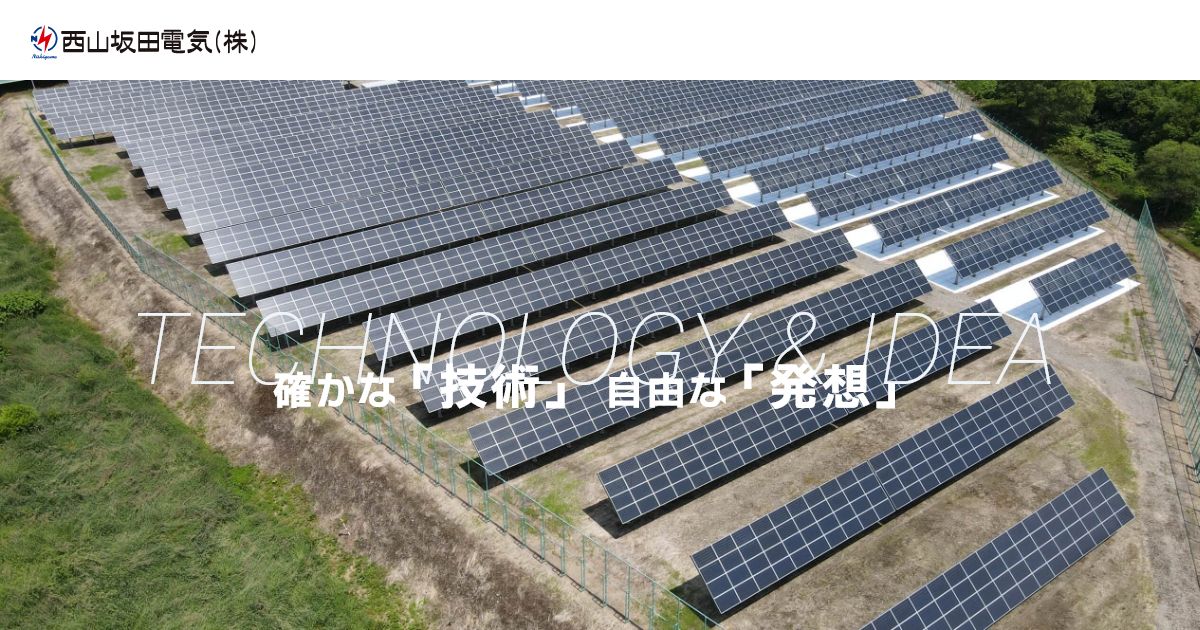
But to answer your question, the only existing bifacial power plant in Japan released its 2014 data publicly early this year. Its reports suggest clear output gains from 18% (summers) to 48% (winters - snow). This data is highly convincing in the case of bifacial modules, I believe.
Here you go: http://www.nishiyama-s-denki.co.jp/ (Tip: Google Translate can help you get through the website, but not the PDFs).
Another article you may find interesting: http://www.pv-tech.org/guest_blog/bi...kwh_cost_reducLeave a comment:
-
-
I am sorry for such a late intrusion, but I have a few points to mention. As has already been noticed in the previous threads, yes the NeON module is a 'mono-facial' module but uses bifacial cells. Yes, even with an opaque backsheet, bifacial cells have a better output compared to a 'standard' module.
A PhD project focused on "Bifaciality" at SERIS (I hope you are familiar with this lab) did theoretical and practical measurements and found that monofacial modules with bifacial cells stand to gain around 5% Isc compared to the ones with monofacial cells. (Chapter 5: http://scholarbank.nus.edu.sg/bitstr...pdf?sequence=1). This gain mainly comes from the reflection through cell gap that the back of the cell will be receiving.
Another observation everyone seems to be missing out on is that LG is using multi-busbar (12) in these modules instead of the traditional ones. This minimises the electrical losses due to interconnection and increases the CTM of the module.
One more thing, I don't know why LG mentioned 'Commercial use' in their data sheets, but I don't think if they are using an opaque backsheet, the underlying surface beneath the module and the distance between the two is going to make any significant contribution to the rear albedo.
Now what I don't know is, what's the price/kWp with these modules? Is it higher or lower than if you use a standard Yingli or Trina module, for the same project?Leave a comment:
-




Leave a comment: